
However, the department has not changed ITRs significantly, considering Covid-19 crisis.
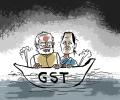
CAG recommended fixing a definite time frame for rolling out simplified GST return forms.

The Cabinet has cleared a Bill to set up a government-owned development finance institution (DFI) with initial paid-up capital of Rs 20,000 crore so that it can leverage around Rs 3 trillion from the markets in a few years to provide long-term funds to infrastructure projects as well as for development needs of the country. To put it in perspective, Rs 3 trillion constitutes slightly less than 3 per cent of the Rs 111 trillion to be spent on over 7,000 projects in the National Infrastructure Pipeline from 2019-20 to 2024-25. Besides, the government will give Rs 5,000 crore as grant to the institution, Finance Minister Nirmala Sitharaman on Tuesday told the media after the Cabinet meeting.

The apex court has settled the long-pending dispute between companies such as Samsung, IBM, HP & others and the tax department.

Taking lessons from that, I would think seamless digital payments is something you have to clearly have a roadmap for, the FM said.

Working hours cannot go beyond 48. Those who give a four-day week will have to provide three consecutive holidays after that.

'Pump prices of petrol and diesel have reached historical highs. An unwinding of taxes on petroleum products by both the Centre and the states could ease the cost-push pressures,' the Monetary Policy Committee (MPC) has said.

The department of investment and public asset management (Dipam) can also seek in-principle approval from the Cabinet Committee on Economic Affairs (CCEA) for strategic divestment of PSUs on a case-to-case basis considering investor appetite and sectoral trends.

Of the seven surveys presented under Modi govt, predictions of three were quite close to the actual GDP growth rate, one saw the base year change in between, but the last three were way off the mark.

India has demanded resumption of export benefits to certain domestic products under GSP, and greater market access for its products from sectors like agriculture, automobile, auto components and engineering. On the other hand, the US wants greater market access for its farm and manufacturing products, dairy items and medical devices, data localisation, and import duties cut on some ICT products.

Sitharaman does away with loans from National Small Savings Fund to Food Corporation of India.

To enable widen the fiscal deficit beyond the permissible limit under the present legislation, the government may have to propose amendment to the FRBM Act in the Finance Bill.

There are various estimates of India's debt to GDP ratio, but the consensus is that that it would be over 80 per cent at the end of the current fiscal year.

As the largest producer of vaccines in the world, with 60 per cent of the global share, India is well-positioned to use its existing manufacturing capabilities to contribute to mass vaccine production and distribution needs for other countries in addition to meeting its domestic requirements, said Moody's.

As spending on infrastructure has three times the desired impact, the government's Rs 111 trillion National Infrastructure Pipeline should be accelerated: Assocham president, Vineet Aggarwal

Dharavi's success underlines the importance of community participation in any public health crisis.

If the government cuts wasteful expenditure as it is trying now, the deficit would at most fall to 8 per cent, not less than that.

'However, this time it looks like that is not working.'
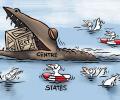
This provision is a very smart rule against fraudster and would not affect any genuine business entities or Ease of Doing Business in any manner, said a source.

An important focus of the dry run will be on management of any possible adverse events following immunisation.
 © 2026 Rediff.com - Advertise with us - Disclaimer - Privacy Policy - Sitemap - Feedback - About us - Terms of use - Grievances